
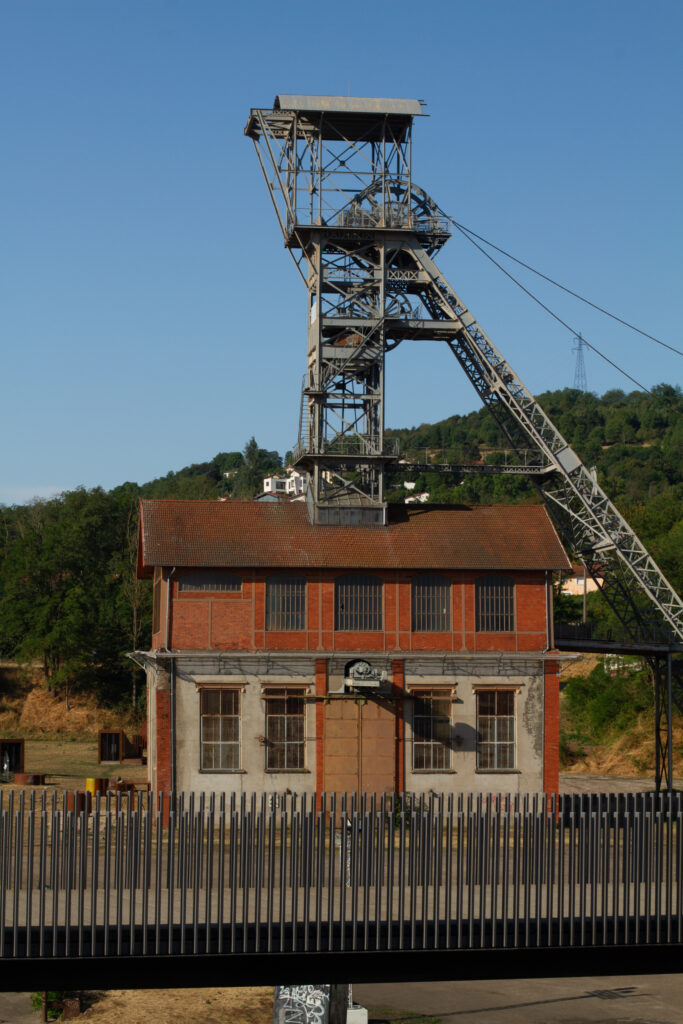
My art connects the economic, geological, and social history of mining in the Gier Valley with contemporary considerations of labor and environmental impact. This body of work emerged during my 2026 Summer Artist Residency at Atelier d’Art de la Boule Rouge in Saint-Étienne, France. As a former resident with ateliers d’artistes de la Ville de Saint-Étienne (2018-2022), I wanted to take advantage of my new/old local context, exploring the physical topography of the town’s Terrils (slag heaps); man-made mountains that stand as physical monuments to the mining activity underpinning the region’s growth and rapid industrialization in the 19th and early 20th centuries. By studying and visiting numerous mining wells, shafts, and sites including the Crassiers de Michon, I aimed to observe and touch the twin “mamelons” that emerged in a little over 15 years during the post-war period, to dominate the city’s skyline.

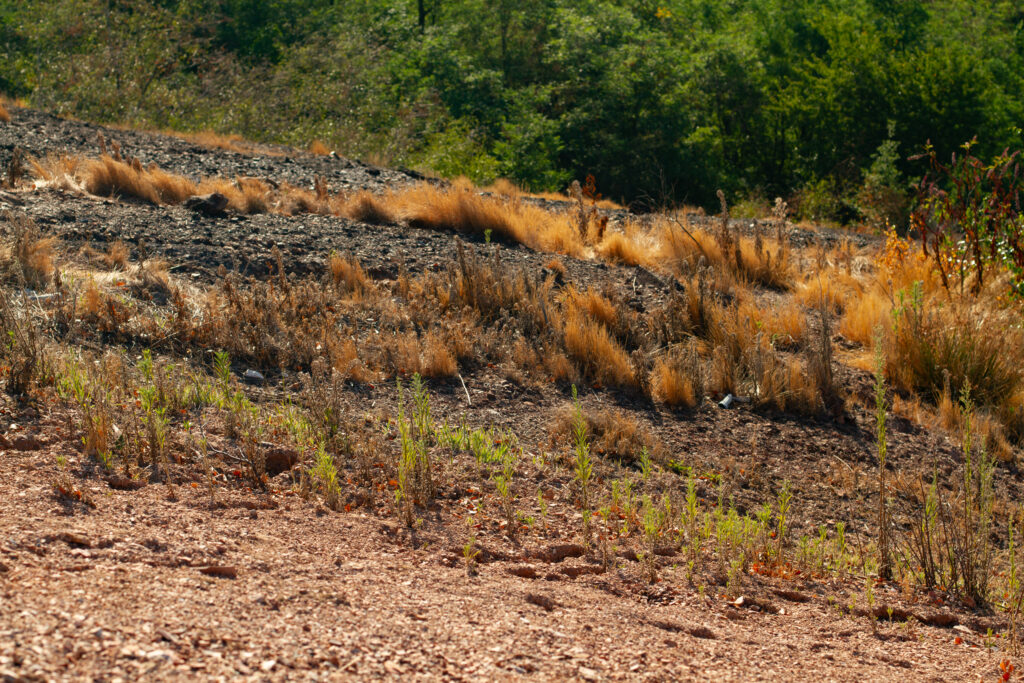
During my residency, I photographed plants growing on the slag heaps, whose summits continue to repel vegetation, due to a mixture of intense wind and continuing off-gassing from coal residues within each mound.


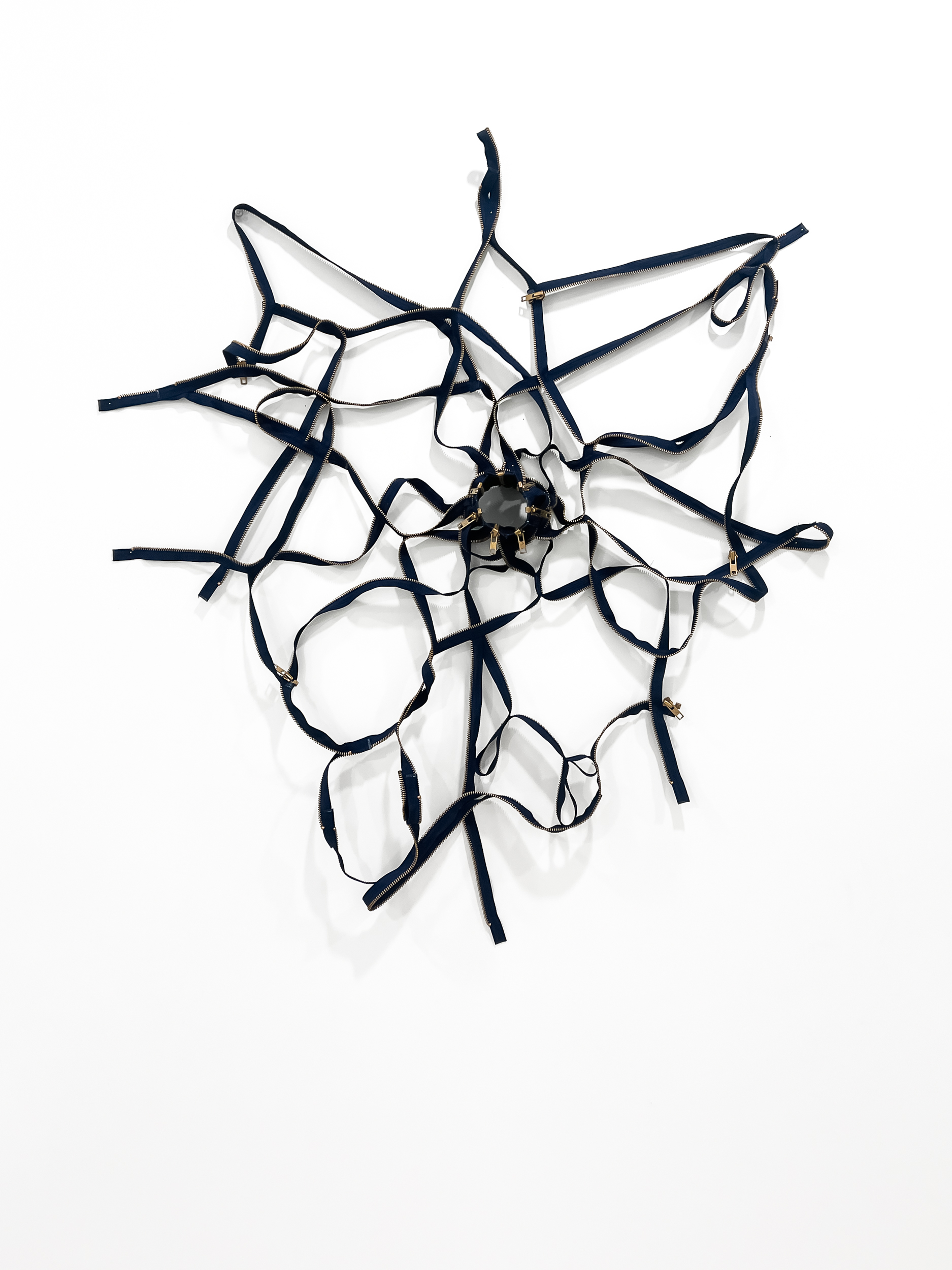
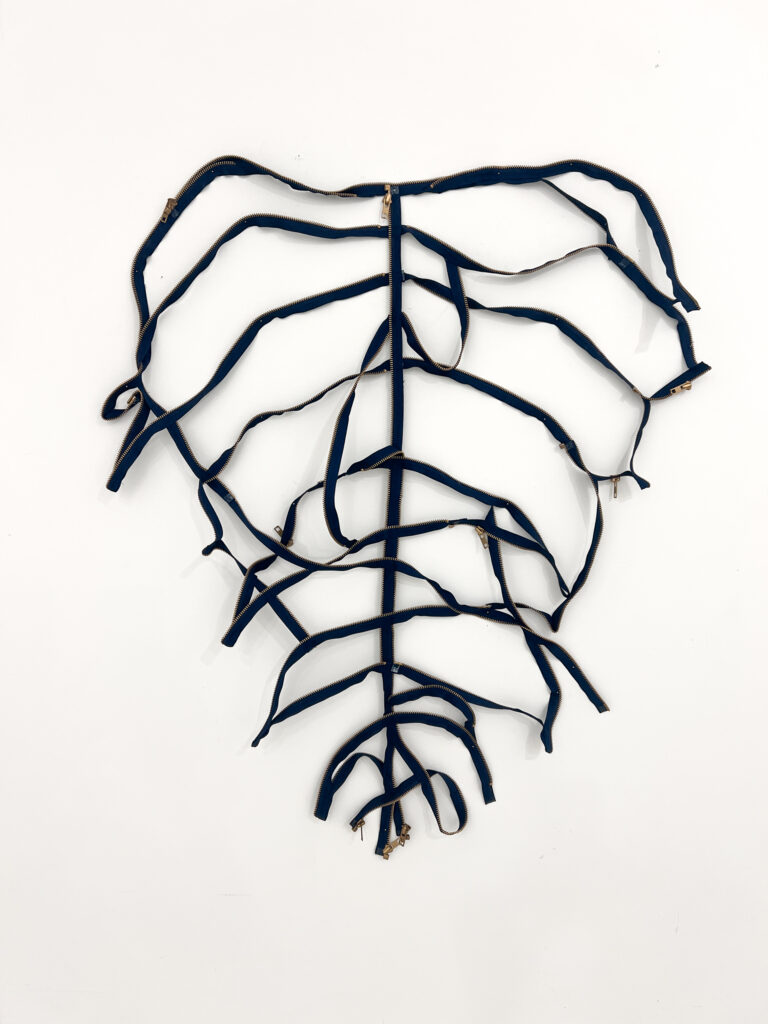
My soft sculptures and works on paper that explore relationships between industrial waste (slag heaps), plants (both of the Carboniferous period and from modern day pioneer ecosystems), and labor conditions in the Loire coal mining basin. By physically manipulating and sewing together zippers otherwise destined to produce blue collar work wear, I explored the physical properties and limitations of these objects, and their capacity to stand in for lines and forms on a picture plane.
Zippers evoke opening and closing and act as metaphors for entering and emerging from the earth. By drawing and sculpting something “natural” (forms inspired by plant-life) out of an element of clothing associated with the industrial revolution, I evoke the complex relationships between humankind and the environment. Even as plants now “reclaim” abandoned industrial sites like slag heaps, they are forever affected by how we manage and develop land, just as our decisions are conditioned by the physical properties of minerals formed from plant life that flourished 300 million years ago.



In Saint-Étienne, I also discovered a personal connection to the town’s mines, with the help of the Departemental Archives. My Polish paternal great-grandfather, who was detained and then sent to a GTE (Groupements de travailleurs étrangers) forced labor camp under the Vichy regime, worked in a cantine for the Puits de la Chana Coal Mine, in France during World War 2. He was a day shift worker, rather than an underground miner (travailleur du fond), however he prepared meals for coworkers working in the vast and unstable galleries over 8-hour intervals, in the bowels of the earth.
This residency was supported by an International Travel Fund Grant from UNCG, the Atelier d’Art de la Boule Rouge, the Departemental Archives of the Loire, with material support from the UNCG CARS department, and research support from Rodolphe Hernandez and Pierre-Olivier Mazagol.