
This piece is part of a larger body of work inspired by the Hopewell Culture mounds and geometric enclosures from the Middle Woodland period (200 BCE – 500 CE). I became really interested in these places when I was teaching in Ohio, where most of the sites are concentrated. Serpent Mound is a 411 meter long effigy mound in Peebles, OH that has been repeatedly visited and described by archaeologists, with vastly different outlines of the same physical site, over the past 200 years. The site itself is fascinating with the curves of the serpent oriented towards specific lunar rise and set points and the serpent itself aligned to the summer solstice sunset. It is also reportedly the largest serpent effigy in the world. Here, I have gathered and scanned outlines and drawings of the mound from various scientific texts and museum collections, transforming them into vectorized digital drawings at a consistent scale. I then carved a piece that brought together a variety of perceptions of the same place, all in one artwork.
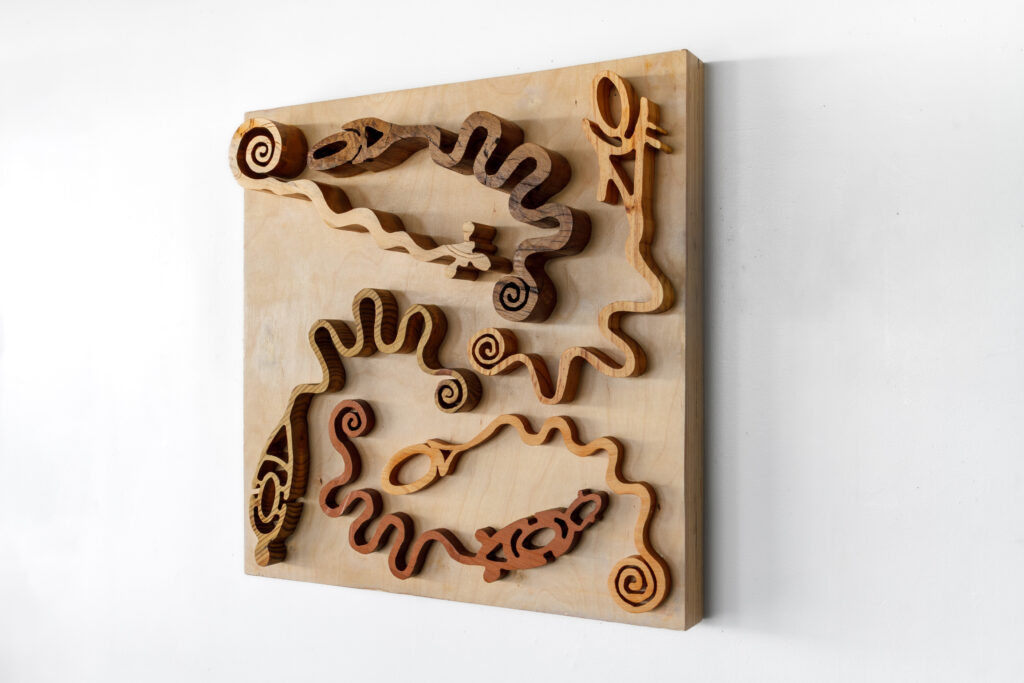
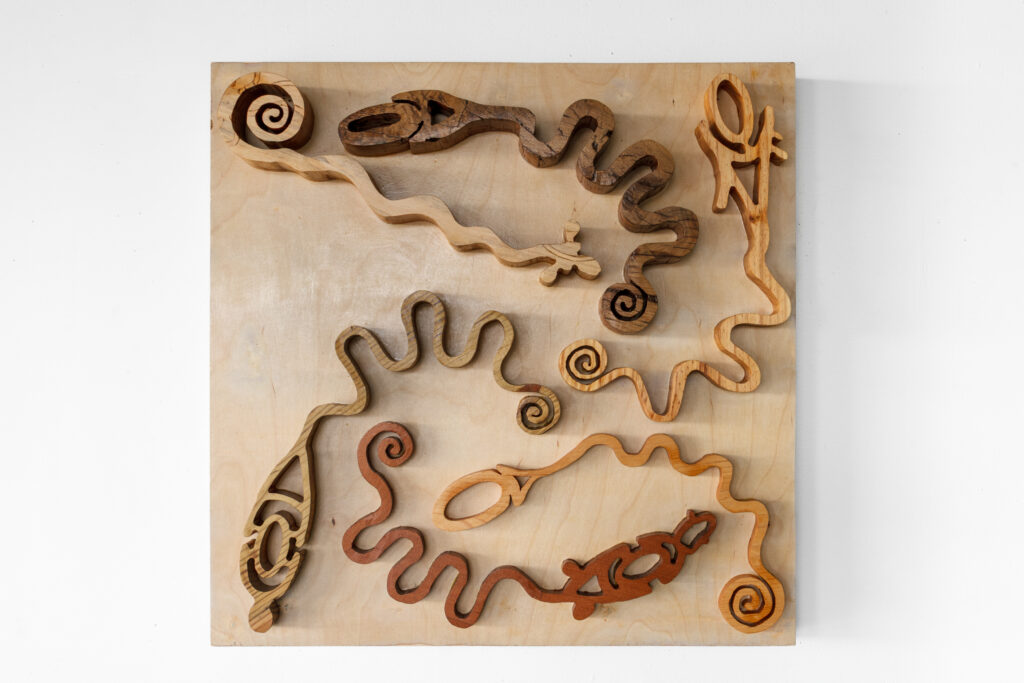
Serpent mound collection, 2025, 27″ x 27″ x 6,” various found wood species, plywood base, varnish.
Specific shapes in this piece come from the following sources: Modern Day GIS Satellite data, Cyrus Thomas 1880s after DH Holmes, Peabody Museum Sketch 1887, William Pidgeon 1883, Squire and Davis 1848, JP Maclean American Antiquarian 1885.
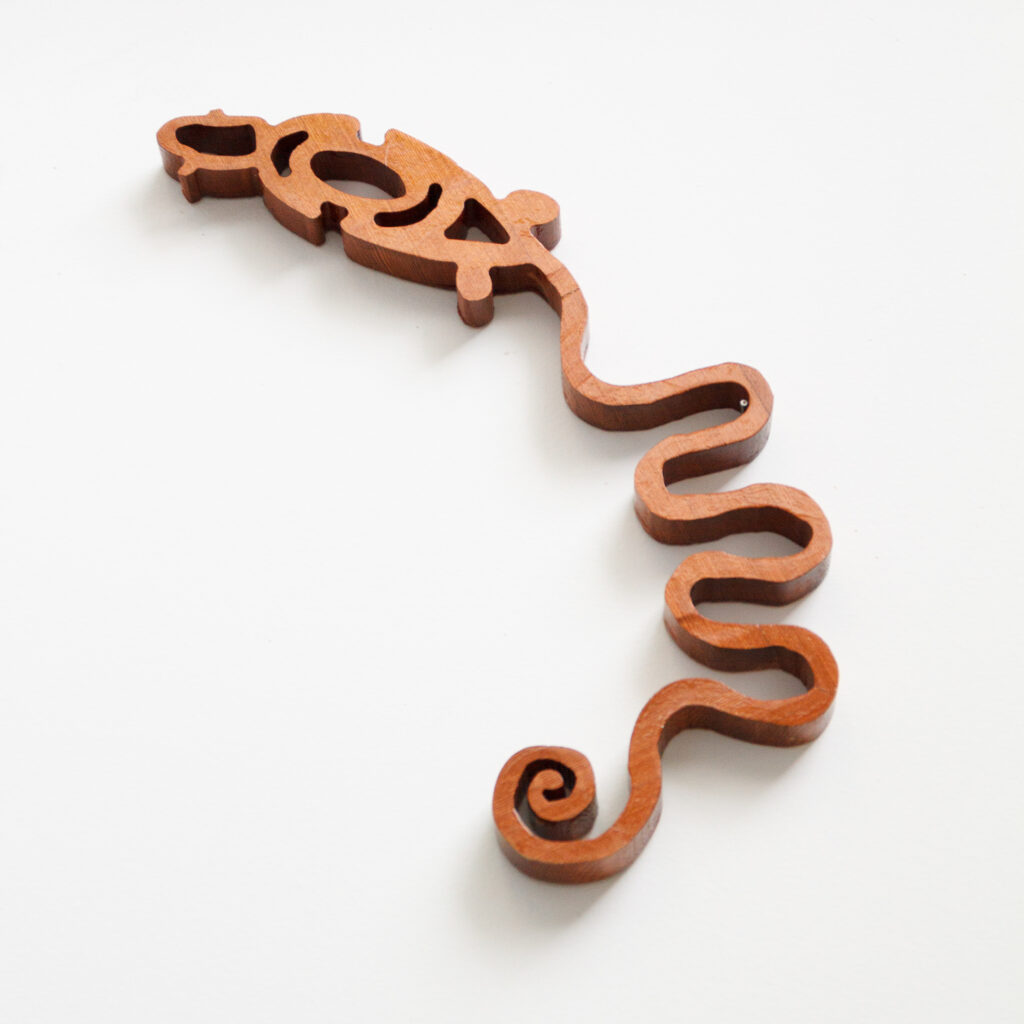
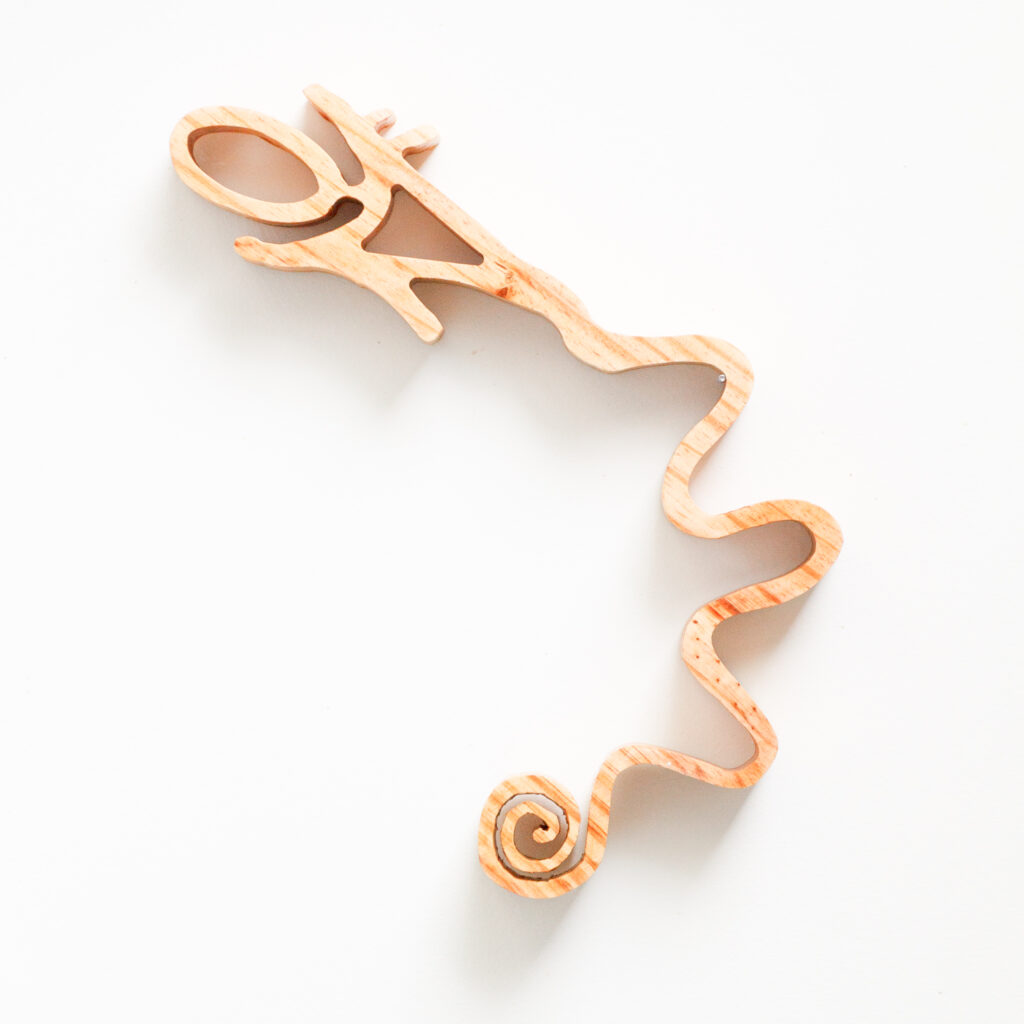
The wall-hung sculpture is made from a plywood base and a variety of wood species (no 2 snake forms are from the same type of wood), including oak, chestnut, cherry, etc. It has a hanging wire fitted to the back of the artwork to allow for easy installation. Each of the forms are affixed to the base using a permanent peg and glue system and everything is coated in wood varnish. The images below portray the finished piece, as well as photographs of individual component before they were integrated into the artwork, as a whole.